
Indian exports to the US will face a 10% tariff, down from 25%, for 150 days following a US Supreme Court ruling. However, uncertainty persists due to potential further tariff hikes and long-term implications.

Among Sensex firms, Asian Paints jumped the most by 4.18 per cent. Mahindra & Mahindra, Bharti Airtel, ITC, Hindustan Unilever, ICICI Bank and Reliance Industries were also among the gainers. However, Infosys, HCL Tech, Eternal, Tech Mahindra and Tata Steel were among the laggards.

India's eight key infrastructure sectors' output stood at 3 per cent in September, slower than the 6.5 per cent expansion recorded in August, according to official data released on Tuesday. The core sectors' output growth was 2.4 per cent in September last year.

Donald Trump's inconsistent statements and actions regarding the conflict with Iran have drawn criticism and confusion, raising questions about American credibility and the direction of US foreign policy.
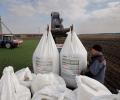
For the first time, the government is likely to dip into the Oil Industry Development Fund (OIDF) to finance part of its fertiliser subsidy programme for 2025-26, according to official sources. The finance ministry has accounted for Rs 23,000 crore in the FY26 Budget as net additional resources to be drawn from dedicated reserve funds, including the OIDF, the Agriculture Infrastructure and Development Fund, and the Universal Service Obligation Fund.
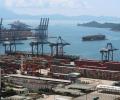
With the Iran war escalating sharply and crisis deepening in the global energy market, India on Monday unveiled a coordinated plan to support exporters and shippers caught in the fallout.

With crude palm oil prices on the rise, companies have started to jack up rates of soaps and edible oils in order to pass on the hike to consumers. Crude palm oil, one of the main ingredients in the manufacture of some consumer goods, saw a price rise of 45.2 per cent in the last three months. One of the country's largest consumer companies, Hindustan Unilever, said it has already started to take price increases in the skin cleansing category.

Shares of tyre manufacturers have outperformed broader equity benchmarks, buoyed by multiple tailwinds. Softer raw material prices, an uptick in demand from automakers following the reduction of the goods and services tax (GST) rates, and steady replacement demand have lifted sentiment toward the sector.

The commerce ministry on Tuesday said the discussions with visiting US Chief Negotiator Brendan Lynch on the proposed bilateral trade agreement were positive and forward looking.
Eight infrastructure sectors' growth slowed down to 2 per cent in July 2025 from 6.3 per cent in the same month last year, according to official data released on Wednesday.
Union Budget 2012-13 has hiked the cess on crude petroleum oil produced in India from Rs 2,500 per tonne to Rs 4,500 per tonne. This is highly negative for upstream companies producing crude oil because the companies have to absorb the hike in cess as crude oil prices are priced based on the landed cost of imports.

India's crude oil imports from Russia fell for a second straight month in January to its lowest in 12 months but the nation's insatiable appetite for Russian crude remains for the long term, according to data from energy cargo tracker and industry officials. Russia supplied 1.2 million barrels per day of crude oil to India in January, down from 1.32 million barrels in December and 1.62 million barrels in November 2023, according to data from energy cargo tracker Vortexa. Russia however continues to remain India's top oil supplier, accounting for a little less than a quarter of 4.91 million barrels a day of oil that the world's third largest energy consumer imported in January.

Stock markets rebounded on Friday with the benchmark Sensex closing higher by 316 points after heavy buying in banking and metal shares amid optimism over trade deal progresses and India's participation in Pax Silica.
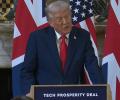
During a visit to the UK, former US President Donald Trump reiterated his claim of intervening to resolve a conflict between India and Pakistan, linking it to trade negotiations. He also discussed tariffs on India for buying Russian oil and the Russia-Ukraine conflict.

The output of eight key infrastructure sectors slowed down to an eight-month low of 0.5 per cent in April due to contraction in the production of crude oil, refinery products and fertiliser. According to official data released on Tuesday, these eight sectors -- coal, crude oil, refinery products, natural gas, steel, cement, electricity and fertiliser -- expanded by 6.9 per cent in April 2024.

Among Sensex firms, Bajaj Finserv, Bajaj Finance, Tata Steel, Reliance Industries, Sun Pharma, Tata Motors Passenger Vehicles, Axis Bank and Infosys were among the major gainers. Bharti Airtel and Asian Paints emerged as the laggards from the pack.

Commerce and Industry Minister Piyush Goyal announced that an interim trade agreement between India and the US is likely to be signed in March and operationalised in April, with chief negotiators meeting in Washington to finalize the details.

The government has cut the windfall profit tax on crude oil produced in the country while the levy on exports of diesel and ATF has been hiked, an official notification said. The tax, levied in the form of special additional excise duty or SAED, on domestically produced crude oil was reduced to Rs 6,700 per tonne from Rs 7,100 a tonne. SAED on the export of diesel was increased to Rs 6 per litre from Rs 5.50 a litre and on jet fuel or ATF to Rs 4 per litre from Rs 2, the notification said.

Asian Paints reported a good performance for the second quarter (July-September) of 2025-26 (Q2FY26), with some help from base effects, despite strong competition and extended monsoon. Volume grew in low double digits in the key domestic decorative paints, and value in that segment grew by 6 per cent. Ebitda (earnings before interest, taxes, depreciation, and amortisation) grew 21 per cent year-on-year (Y-o-Y), and PAT (profit after tax) grew 14 per cent. Asian Paints also defended market share better after several quarters where it had lost ground to Birla Opus.

The Odisha Police on Wednesday beefed up security at port town Paradip after the arrival of a ship with 21 Pakistani crew members on board, officials said.

Israel and the United States had a plan. Iran punched back. And now the Gulf is reeling, the world is beginning to feel the pain and, as on date, no one in Washington or Tel Aviv appears willing to admit that the punch has landed, notes Prem Panicker, continuing his must-read blog on the war in the Middle East.

He added that India sells to the US, its biggest "client", "massive" amounts of goods, "but we sell them very little - Until now a totally one sided relationship, and it has been for many decades."

Gor also announced that India will be a member of the Pax Silica alliance.

Indian Oil Corporation's (IOC's) Q2FY26 operating profit of 14,600 crore beat Street estimates and was up 16 per cent on a sequential basis. It surged 287 per cent over the year-ago quarter on account of an improved refining performance.

Oil imports are a third of India's total import bill.
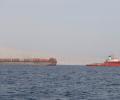
US strikes on Iran's three main nuclear facilities have once again raised concerns that Tehran might shut down the Strait of Hormuz - one of the world's most critical chokepoints, through which a fifth of global oil and gas supply flows.

Notably, US President Donald Trump and his administration have continuously targeted India over its purchase of Russian crude oil. India, on the other hand, has always maintained that India's purchases are based on its domestic needs and economic security.

Economics and politics both have major roles in determining oil prices.

Indian equities on Dalal Street saw volatility. Track Sensex, Nifty50 movement and key market drivers for Feb 25, 2026.

Stock investors will track the ongoing conflict between Iran and Israel, Brent crude oil prices, inflation data and the US Fed interest rate decision for further cues this week, analysts said. Tariff-related news would also dictate trends in the equity market, experts noted.
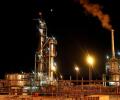
Ukrainian drones attacked the Kirishi oil refinery in Russia's northwest, one of the country's largest, sparking a fire when debris fell from a shot-down drone, Russian officials said on Sunday, France 24 reported.

The recent surge in crude oil prices could shave off the gains made by India Inc in profit margins in the past few quarters. Worse, it comes at a time when consumer demand in the country is slipping and major global economies are witnessing a slowdown. A back-of-the-envelope calculation suggests that the margin expansion accounted for three-fourths of the rise in the listed firms' operating profit between the April-June quarter (Q1) of FY23 and Q1FY24, and only a quarter of profits gains came from revenue growth.

India and Russia are poised to sign multiple agreements to bolster cooperation in various sectors, including trade and healthcare, during Russian President Vladimir Putin's visit to New Delhi. Discussions will also address the Ukraine conflict and efforts to increase Indian exports to Russia.

Indian equity markets experienced a volatile trading day, with the Sensex and Nifty closing almost flat. Market sentiment was influenced by global cues, US-Iran talks, and profit-booking activities.

The domestic stock market will continue to monitor the Israel-Iran conflict and its impact on global supplies besides prices of crude oil this week, analysts said. Global trends and trading activity of foreign investors would also drive investors' sentiment during the week.
Benchmark equity indices Sensex and Nifty extended their gains for the third straight session on Wednesday, driven by last-hour buying in bank, metal, and FMCG shares.

The Trump administration has sanctioned entities and individuals from India involved in sales of Iran's petroleum and petroleum products, saying the funds from this trade support Tehran's regional terrorist proxies and procure weapons systems that are a direct threat to the US.

The United States action of levying 25 per cent additional tariff on Indian goods is 'unfair, unjustified and unreasonable', India said on Wednesday in a firm reaction, signalling increasing tensions between the two strategic partners over New Delhi's energy ties with Moscow.

India's net oil import bill could widen to $101-104 billion in current fiscal from $96.1 billion in 2023-24 and any escalation in the Iran-Israel conflict could impart an upward pressure on the value of imports, ICRA said on Tuesday. The domestic rating agency said based on its analysis, lower value of Russian oil imports is estimated to have led to savings of $7.9 billion in 11 months (April-February) of 2023-24, up from $5.1 billion in 2022-23.

From the 30-Sensex firms, Larsen & Toubro, Tech Mahindra, Tata Consultancy Services, Reliance Industries, Tata Steel, and Trent were among the biggest laggards. On the other hand, Eternal, ICICI Bank, Bajaj Finance, and Bharat Electronics were the gainers.
